
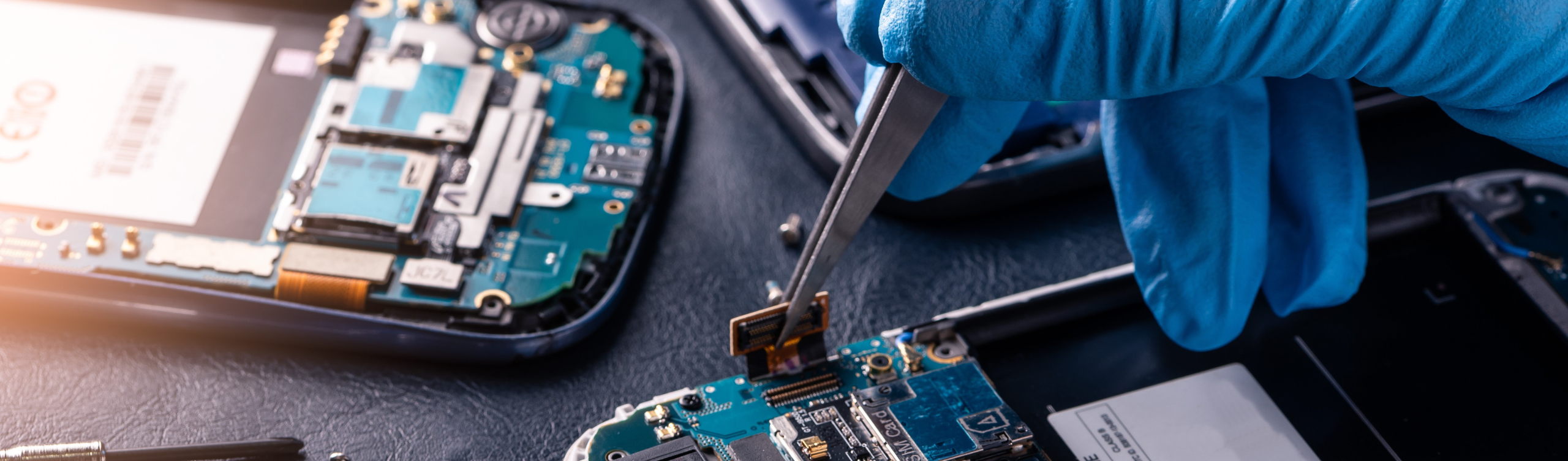
Webinar – Focus Repairability: Navigating the new EU Right to Repair Directive
Register now for our webinar and get ready for the Right to Repair Directive!
Every year, 35 million tonnes of waste accumulate in Europe from the disposal of defective appliances. For a more efficient circular economy, consumers need products that are easier to repair and therefore usable for longer.
The EU's Directive on common rules promoting the repair of goods, often called the Right to Repair Directive aims to encourage consumers to use goods for longer through standardized and transparent repair options, thereby preventing premature disposal. Responsibility lies with manufacturers, distributors and importers placing products on the EU market.
The directive will apply from 31 July 2026. It will initially cover a wide range of product groups and consumer contracts, while additional obligations will interact with existing and new EU Ecodesign rules. National implementation may also affect B2B relationships, especially where repairability becomes part of the customary quality of products.
Are you aware of your responsibilities? And are your products and organisation already meeting upcoming legal and normative requirements on repairability?
Get ready for the consumers’ right to repair with our compact and insightful webinar. Our well-versed experts will provide you with comprehensive information about the legal framework and your resulting obligations. In addition, you will learn about helpful tools for assessing product repairability and product examples. You will also have the opportunity to ask the experts your questions in a Q&A session.
Webinar:
Focus Repairability: Navigating the new EU Right to Repair Directive
Date: Tuesday, 28 April 2026
Time: 10–11:30 am (MEZ)
Language: English
Price: 199 € (plus VAT)
Registration deadline: 7 April 2026
Webinar agenda:
- Introduction to the EU’s legislative framework on the repairability of products
- Legal requirements of the Right to Repair Directive (EU) 2024/1799 and further to be applied provisions
- Outlook on the Ecodesign for Sustainable Products Regulation (EU) 2024/1781 and work plan on expected design requirements regarding repairability
- EU normative requirements and their application on product design level
- Examples of repairability of household appliances, IT products, luminaires and others
- Q&A and discussion, ask the expert for your specific
Don’t miss our registration deadline and sign up by 7 April 2026. No time? No problem! By registering and booking, you will receive a recording of the webinar.
Our Experts:

Stephan Scheuer | Head of Business Development & Products Sustainability | TÜV Rheinland LGA Products GmbH
Stephan Scheuer is your expert on Eco-design topics such as repairability, recycling or ECO labelling. As Head of Business Development in the Electrical division, he is closely involved with the latest regulatory requirements for electrical products as for runner for other product categories. As a well-experienced speaker, he is skilled at sharing his knowledge with others.

Kathrin Schmidpeter | Product Manager Household Appliances | TÜV Rheinland LGA Products GmbH
As a product manager for household appliances at TÜV Rheinland, Kathrin Schmidpeter is a proven expert in her field. She has a degree in ecotrophology and brings many years of experience in product performance testing and certification to the table. During this time, she has gained in-depth expertise and successfully managed numerous projects in the section of Eco-design for products.
Register now
Please note our cancellation policy: Until 7 April 2026, an admin cancellation fee of 50% will be charged. After 7 April 2026, the admin cancellation fee is 100%. Cancellations must be sent in writing to: salessupport-electrical@de.tuv.com.
The fields marked with * are required for the fast and competent processing of your registration as well as for the preparation of the invoice after the conference.
Back to top